On April 20, the Springfield Police Department (SPD) joined forces with other law enforcement agencies across the region to launch the Blue Envelope Program at traffic stops.
On the SPD website where they address the new changes, it is explained why police have decided to integrate the new policy.
“For individuals who are deaf or hard of hearing, on the autism spectrum, or living with medical or neurological conditions, unexpected encounters with police or first responders can be stressful. Bright lights, loud noises, or sudden instructions may heighten anxiety and make communication more difficult,” SPD said.
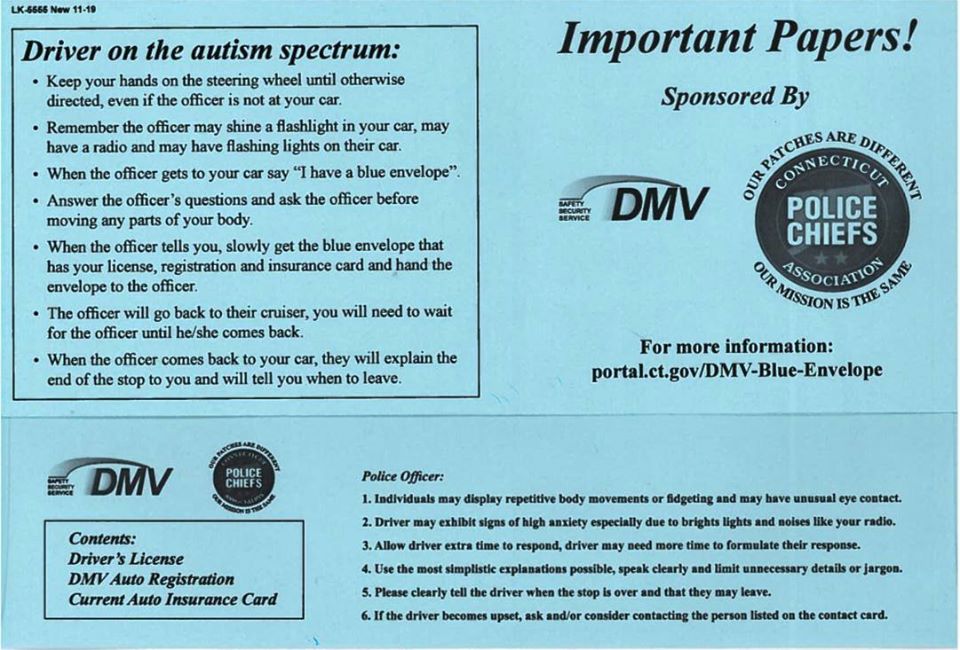
The program directly helps people with special needs, such as those with memory issues, learning disabilities, and physical impairments. A blue envelope with the person’s driver’s license, registration, and proof of insurance is handed to the officer during the stop.
This makes the interaction easier on the individual with special needs, while maintaining communication with the officer and informing them that this person may need extra patience.
Researchers from Autism Spectrum News address in a recent article how the Blue Envelope Program helps those with special needs.
“The outside of the envelope contains useful information for both the officer and the driver on how best to communicate with one another, alerting the officer to a need for extra sensitivity whilst helping the driver navigate a potentially overwhelming situation,” Autism Spectrum News said.
Misunderstandings often happened at traffic stops between special needs individuals and officers.
For the driver, the experience can be sudden and overwhelming. They may not be able to hear or understand the officer’s quick-paced instructions.
For officers, they may act too quickly when they see someone begin to fidget in the car, reach too fast for something, or are unable to follow instructions.
With the new Blue Envelope Program established, miscommunications between drivers and police in Springfield can be settled with a simple envelope.
However, Missouri wasn’t the first one to start this. The program originated in Connecticut in 2020. It was originally created to help autistic drivers, but expanded to other impaired individuals.
Unfortunately, the beginning of the COVID-19 pandemic made this program harder to enforce, and things had to be set aside temporarily.
After overcoming the pandemic, the Blue Envelope Program was able to thrive. Ever since then, these programs have been popping up all across the United States. Around 30 states have either fully or partially begun to incorporate this program into their everyday traffic stops.
The Blue Envelope Program not only helps those with special needs, but it also helps officers be more considerate and opens communication across all parties.